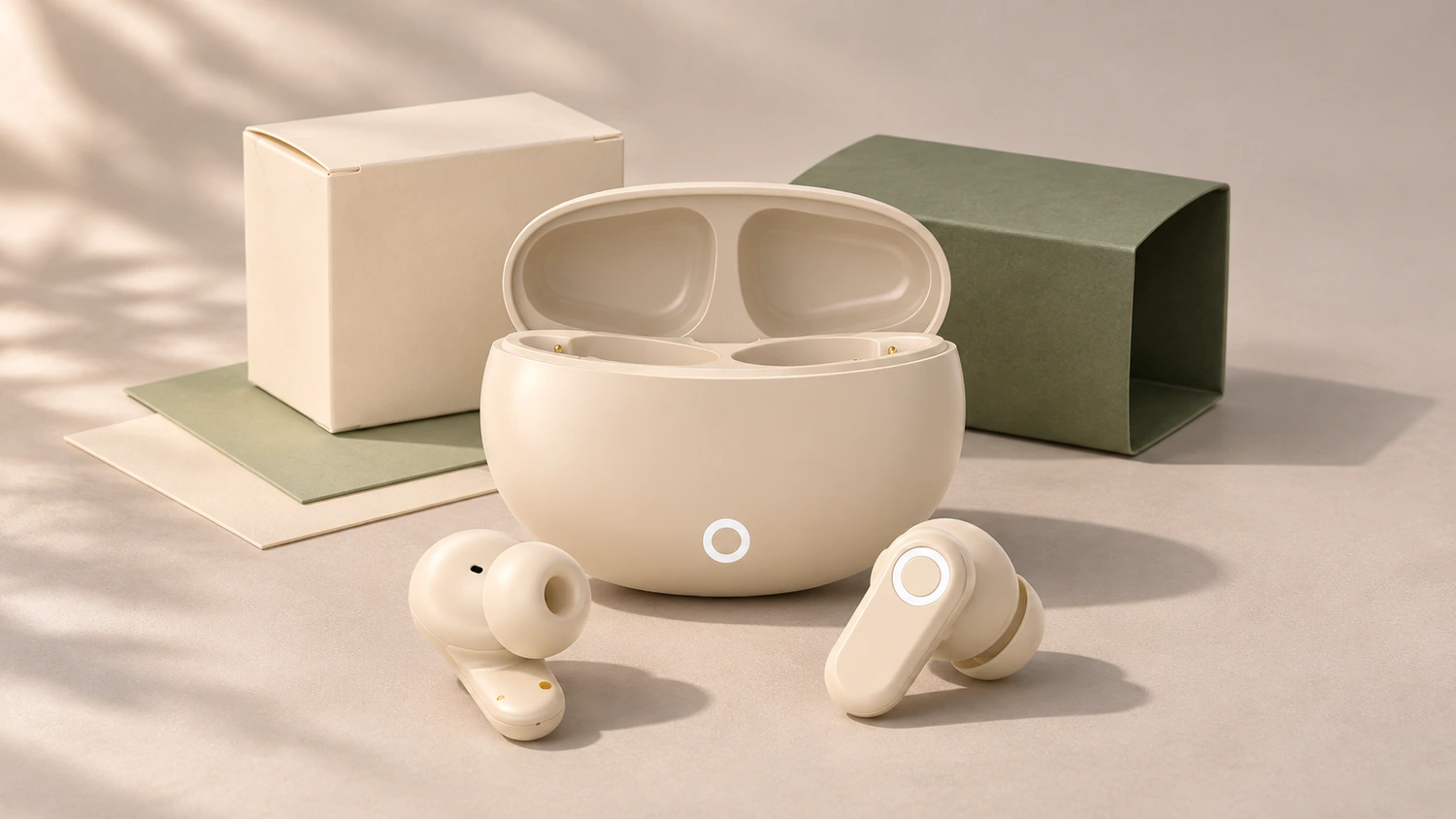
Earbuds shown with a packaging design concept. The packaging is confirmed for each project.
Printing a logo on the charging case of an existing earbud model involves different work from changing its packaging, adjusting its sound and extending its playback time. Even with the same exterior and order quantity, the components purchased, preparation before production and processing required for each unit may differ.
Custom earbuds cost can be understood through these changes: logos involve surface processing; packaging adds materials and production steps; component changes require parts selection and integration into the complete product. A new shape may also add design and tooling costs. Some of this work happens before production, while other work is repeated for every set.
Logo printing: artwork preparation and processing each unit
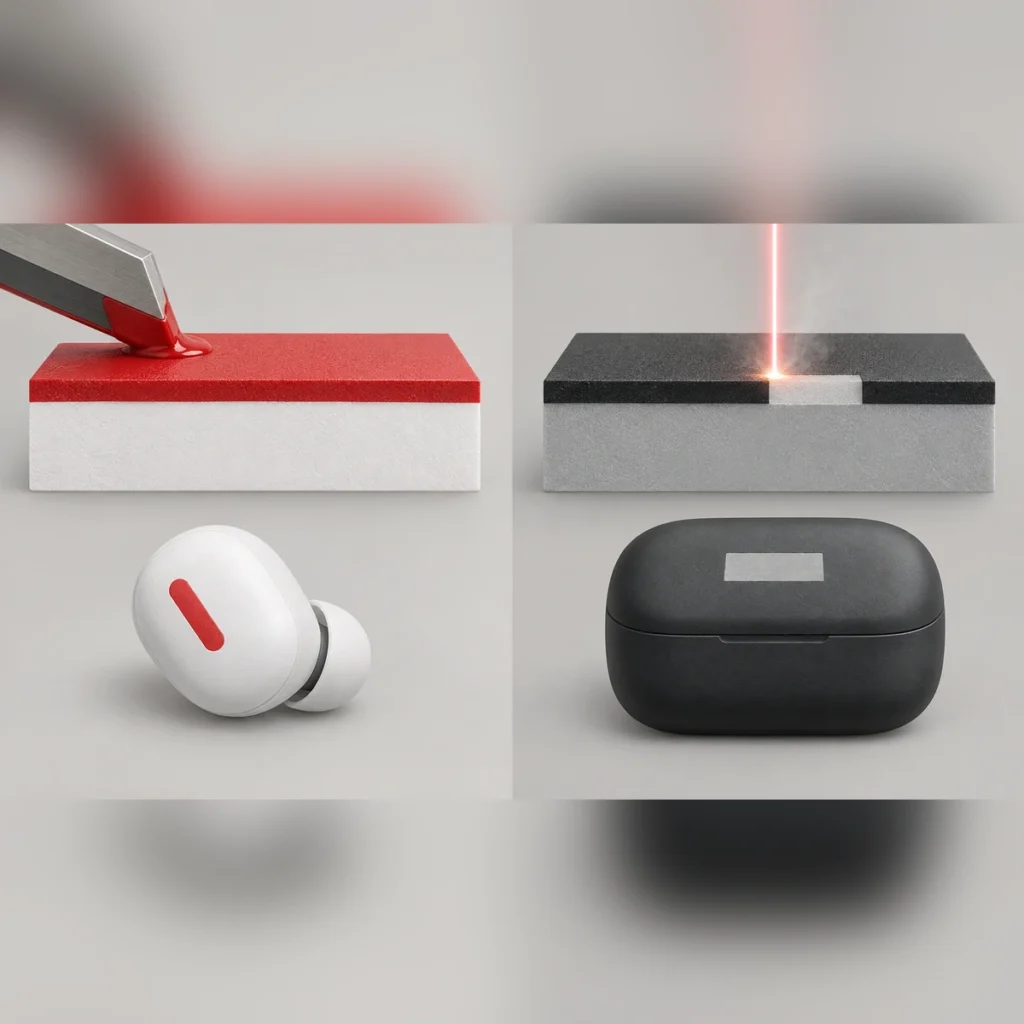
A small logo covers little space, but applying it still takes preparation. With screen printing, for example, the artwork is first made into a screen. Ink then passes through the appropriate openings onto the product surface. The size, position and colors of the design need to be agreed before the products in that batch are printed individually.
Preparing the screen and printing each product are therefore two different types of cost. Looking only at the ink used for a logo overlooks both the preparation and the work of placing the design accurately on the specified surface.
The number of print locations also changes the scope of work. Printing only the case lid involves different surfaces from printing both earbuds and the lid. Even with the same logo, each location needs to be set up for processing. A multicolor design may also require color separation and registration. The method depends on the artwork and process; there is no universal extra charge for each additional color.
Yinshidon can apply logos to both the earbuds and the charging case. Screen printing and laser engraving are common options for earbud housings. The position, size and method depend on the housing material and design. The same brand artwork can require different processing on different products and surfaces.
Custom packaging: changing the artwork or changing the box
“Custom packaging” may mean keeping the existing box structure and replacing the artwork. It may also mean changing the paper material, box structure and insert that holds the product. The first mainly changes the printed content; the second changes the packaging materials supplied with every set and how they are made.
Keeping the box dimensions and insert while changing the printed design is not the same printing job as choosing a different opening style and rearranging the case and accessories inside. What the new packaging must hold, and how it holds those items, need to be settled as part of the design. The box, insert and specified accessories required for each delivered set remain costs for every set.
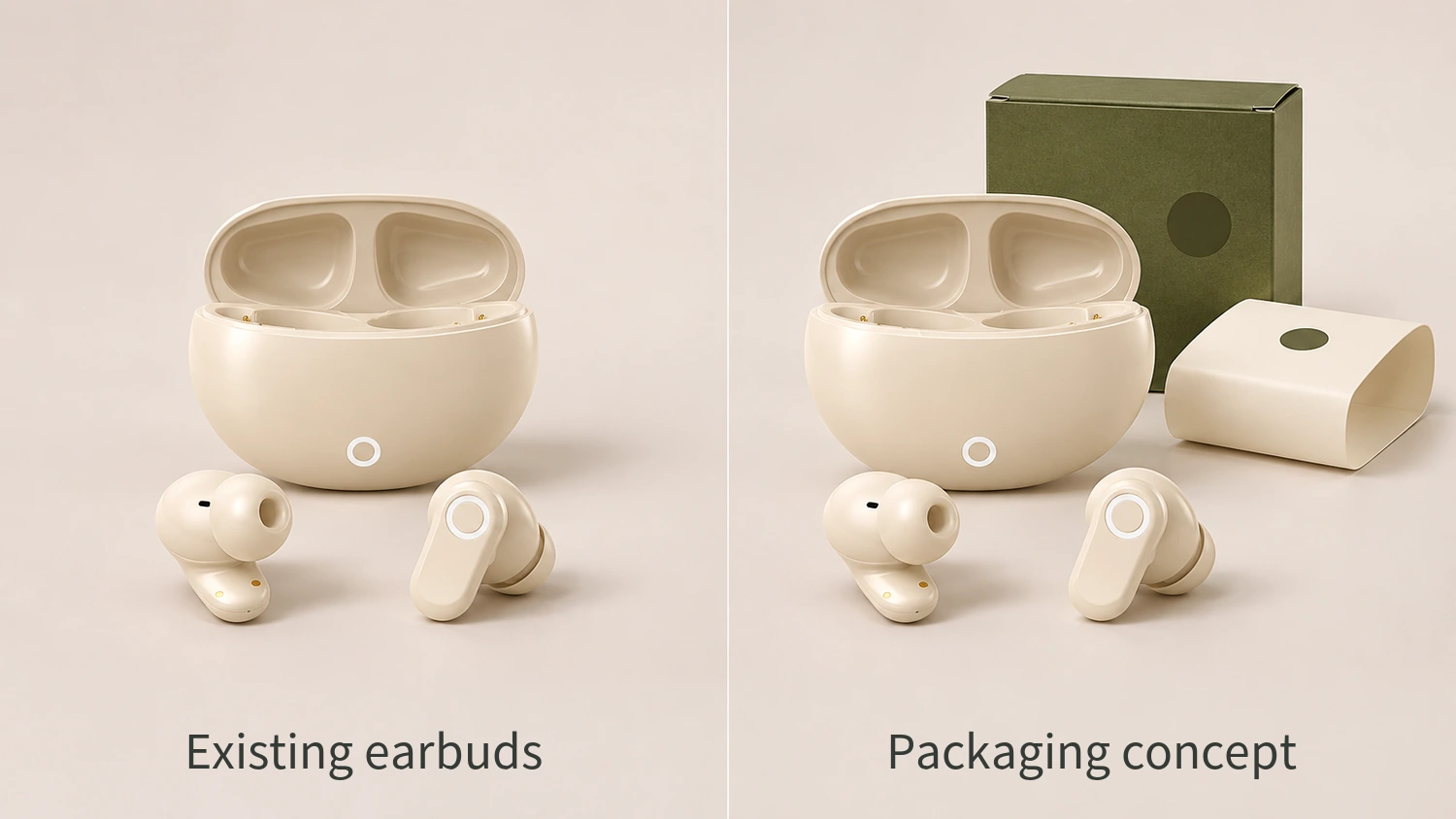
A design concept showing earbuds with a paper box and sleeve. The packaging is confirmed for each project.
Different surface effects add different processing steps. Beyond ordinary printing, effects such as gold or silver foil stamping require operations suited to the chosen material and artwork. Yinshidon can support these packaging finishes; their cost depends on the design actually selected.
Custom packaging does not always involve the same printing-plate preparation, however. Digital printing can print directly from a digital file onto the material without a traditional physical printing plate. Packaging cost therefore needs to be understood in terms of its materials, printing method and finishing operations, rather than the label “custom packaging” alone.
Component changes: making the complete earbuds meet the requirements
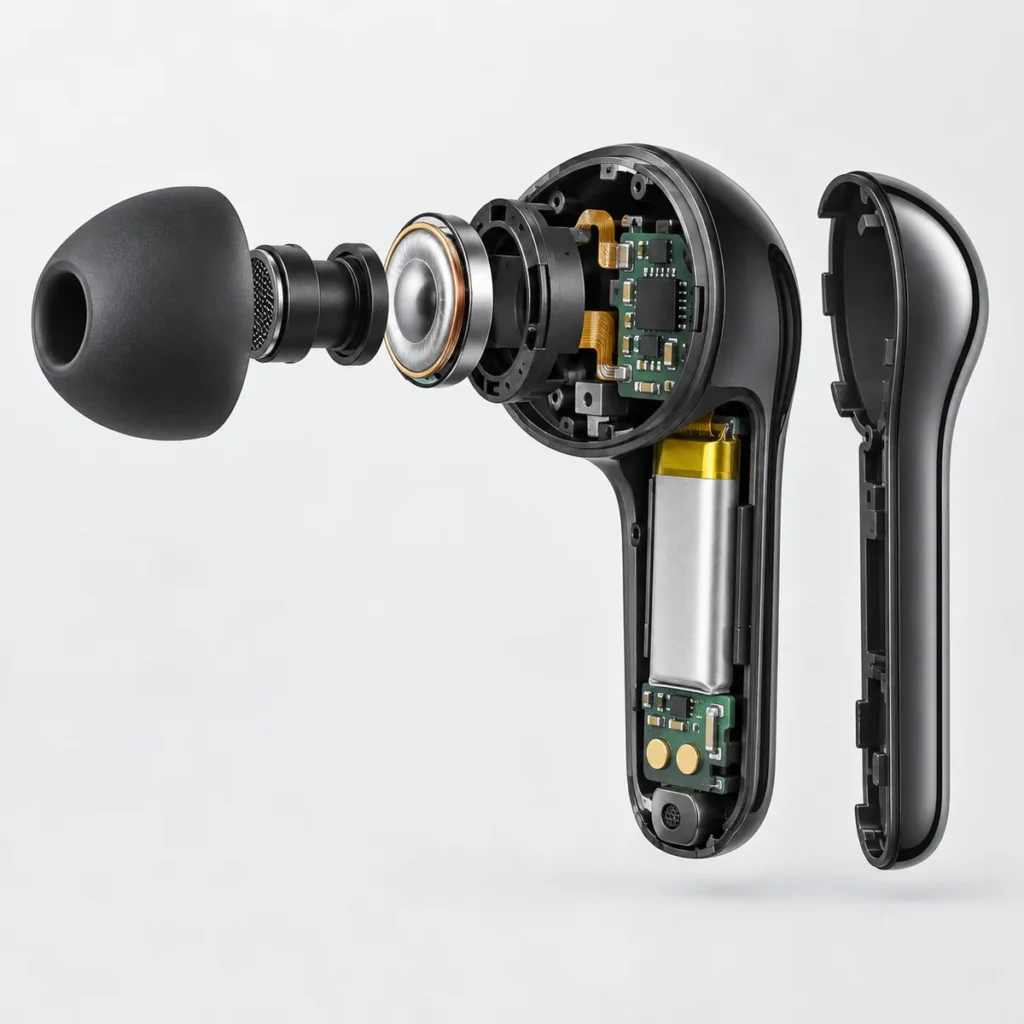
Changing the sound or continuous playback time changes how the earbuds perform. Sourcing specific drivers or batteries, or changing the functional design, adds work beyond surface printing. Once a part is selected, it must work properly in the complete earbuds and deliver the agreed sample performance.
Adjusting the sound requires driver selection and tuning
The driver produces sound, but what the listener ultimately hears also depends on the earbud’s acoustic design and tuning. Installing a more expensive driver does not, by itself, establish that the finished product will suit a particular sound preference.
In Yinshidon’s customization process, drivers can be selected and the sound tuned to the customer’s requirements, then samples sent for listening and approval. The added work includes more than the difference in component purchase price: it also includes building the selected parts into samples, adjusting the sound and checking the result. Production follows the approved sample. A driver name alone cannot establish the final sound.
Longer playback time depends on the battery, space and power use
Battery selection needs to account for the energy it can supply, the space available inside the existing earbuds, and compatibility with the charging and power supply design. Even with the same battery capacity, different power consumption and operating conditions can produce different continuous playback times.
If a suitable battery fits the existing space and design, the main additional work is selection, sourcing and sample validation. If the target requires more battery space, it may also involve housing changes and a tooling assessment, expanding the scope of work. Whether a mold needs to change depends on the actual design. Not every battery replacement requires a new mold.
A continuous playback test on the sample checks the resulting battery life. The battery’s stated capacity or purchase price alone cannot tell you how long the complete earbuds will play.
A new shape: a 3D model and a production mold are different things
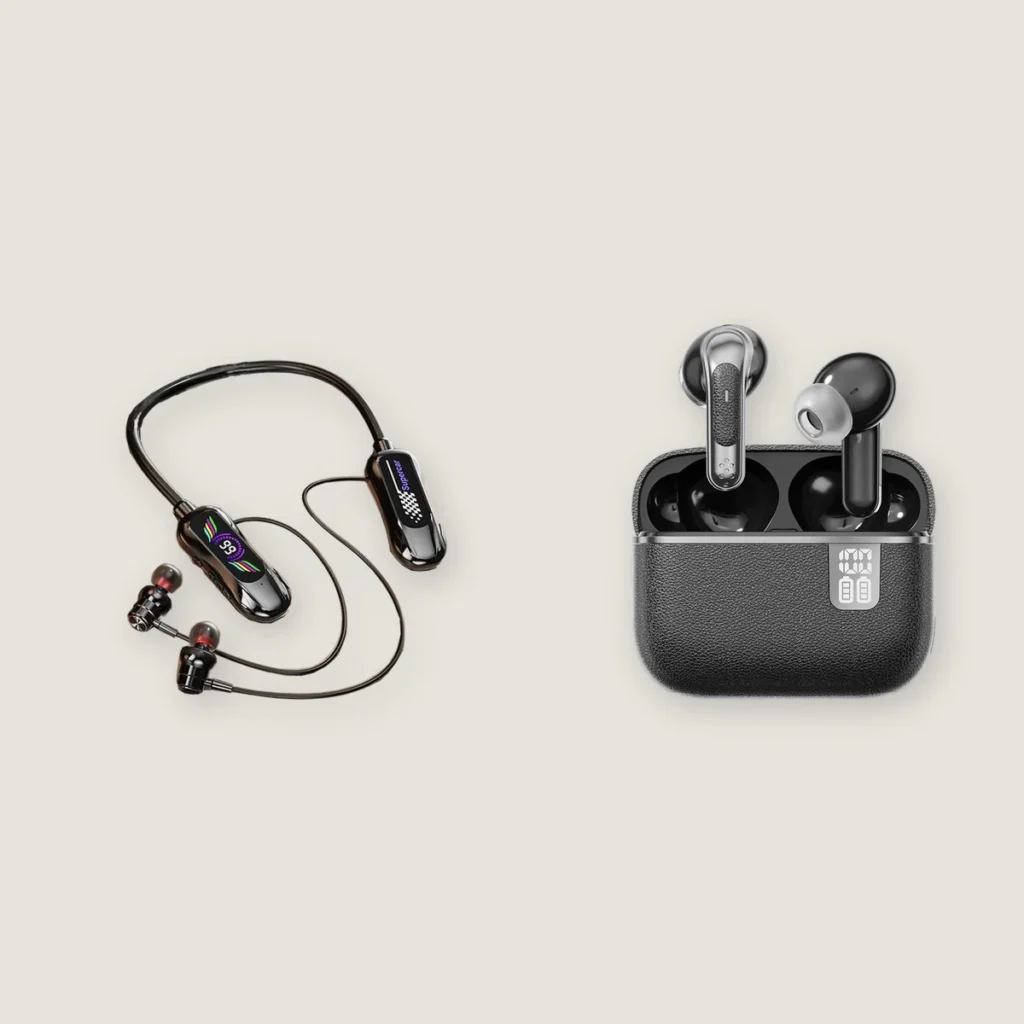
Putting your brand on an existing model allows you to retain its established shape. Creating a new earbud or charging-case shape from your own idea requires turning that idea into a defined design. This includes assessing whether the internal components fit, how the parts fit together and how the housing will be manufactured.
A computer-based 3D model represents the product’s shape and structure. A mold used to produce plastic housings in volume is a separate physical tool that must be designed and manufactured. Completing the model does not mean the production tool is complete. Design fees and mold fees therefore cover different work.
Samples are used to check the actual product. Appearance, fit and sound need to be checked, tried on or listened to using a sample. Turning a design into a sample that can be approved also takes production and validation work. This should not be assumed to be included in creating the model or manufacturing the mold; how that work is charged depends on the project agreement.
Tooling cost cannot be judged only by how large the product looks. The complexity of the molded surfaces, required details and surface finish can all change the work involved in machining and treating the mold. Some shape changes may be possible by modifying an existing mold. If it cannot be reused, a new mold needs to be assessed. Which approach is possible depends on the design and the condition of the existing tooling.
For projects of 20,000 units or more, Yinshidon can provide 3D modeling based on ideas or sketches for a separate design fee. Mold costs require separate confirmation, and any refund of the design fee is subject to negotiation. This design service condition does not mean mold manufacturing is included.
Which costs can be spread across a larger order?
Preparation such as mold manufacturing and printing-plate preparation, where the process requires it, incurs costs differently from the batteries, drivers and packaging in every set. For an unchanged design and an unchanged preparation cost, the allocation can be understood as follows:
Average preparation cost per unit = that preparation cost ÷ the number of units it is allocated across.
As quantity increases, this portion becomes smaller per unit. But every additional set still requires components, packaging materials and processing. A larger quantity does not eliminate these recurring costs, nor does it mean the complete product’s unit price will fall in the same proportion.
If the artwork, packaging, components or shape also change as the quantity increases, the preparation itself may change. The original amount can no longer simply be divided across more units. Whether preparation costs appear as separate charges or are included in the product price also needs to be confirmed for the project.
When comparing custom earbud prices, check whether the two designs involve the same product and the same work. The same housing can contain different components; the same logo can appear in different locations; and two “custom packaging” options can include different materials. Connecting these differences to the work and materials involved makes the prices comparable. For customization scope and minimum quantities, see our earbud customization options and minimum orders.