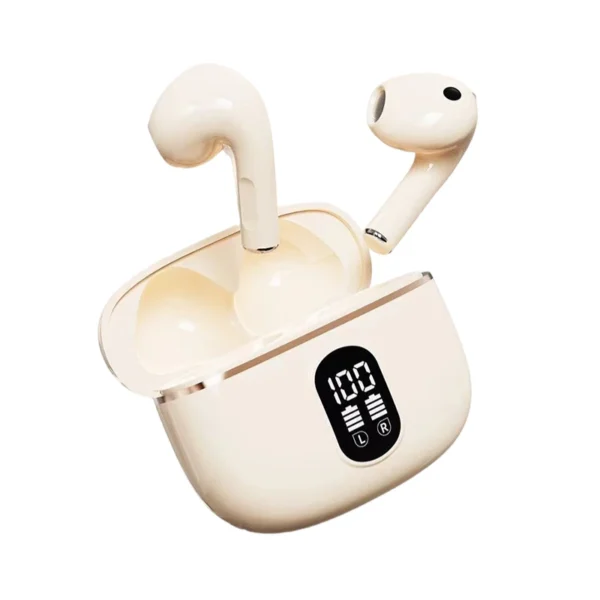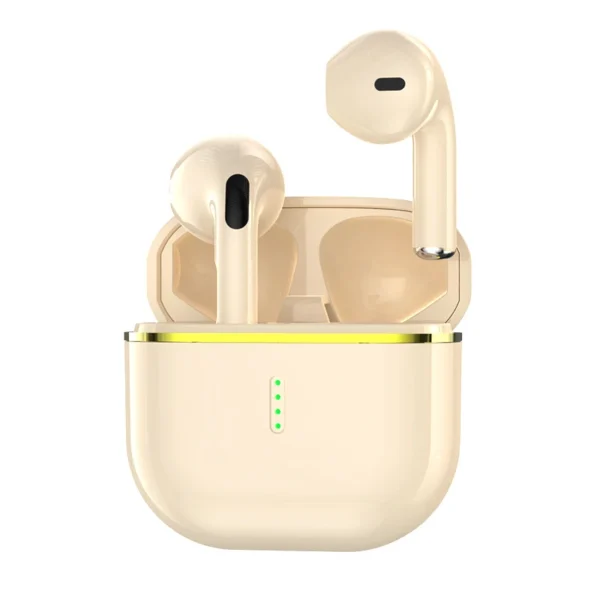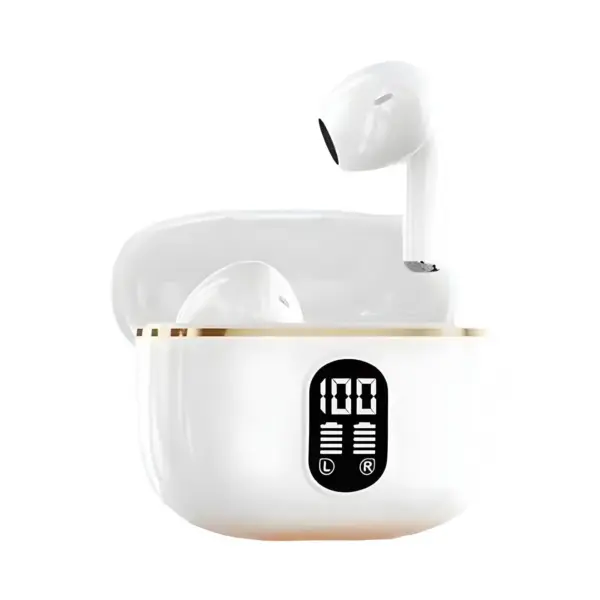
Short answer: not necessarily. The 8 mm, 10 mm, 12 mm, or 13 mm figure shown on an in-ear TWS product page is primarily the driver diameter. A larger diameter may offer greater potential for low-frequency output and a stronger bass response, but it cannot prove that the entire earphone sounds better. What you actually hear is the combined result of the driver, diaphragm, magnetic circuit, acoustic chamber, ear-tip seal, tuning, and test conditions.
That is why two earphones with the same driver diameter can sound completely different. A smaller driver may also be the better choice when you place greater emphasis on distortion, tonal balance, or fit stability.
What driver size can tell you
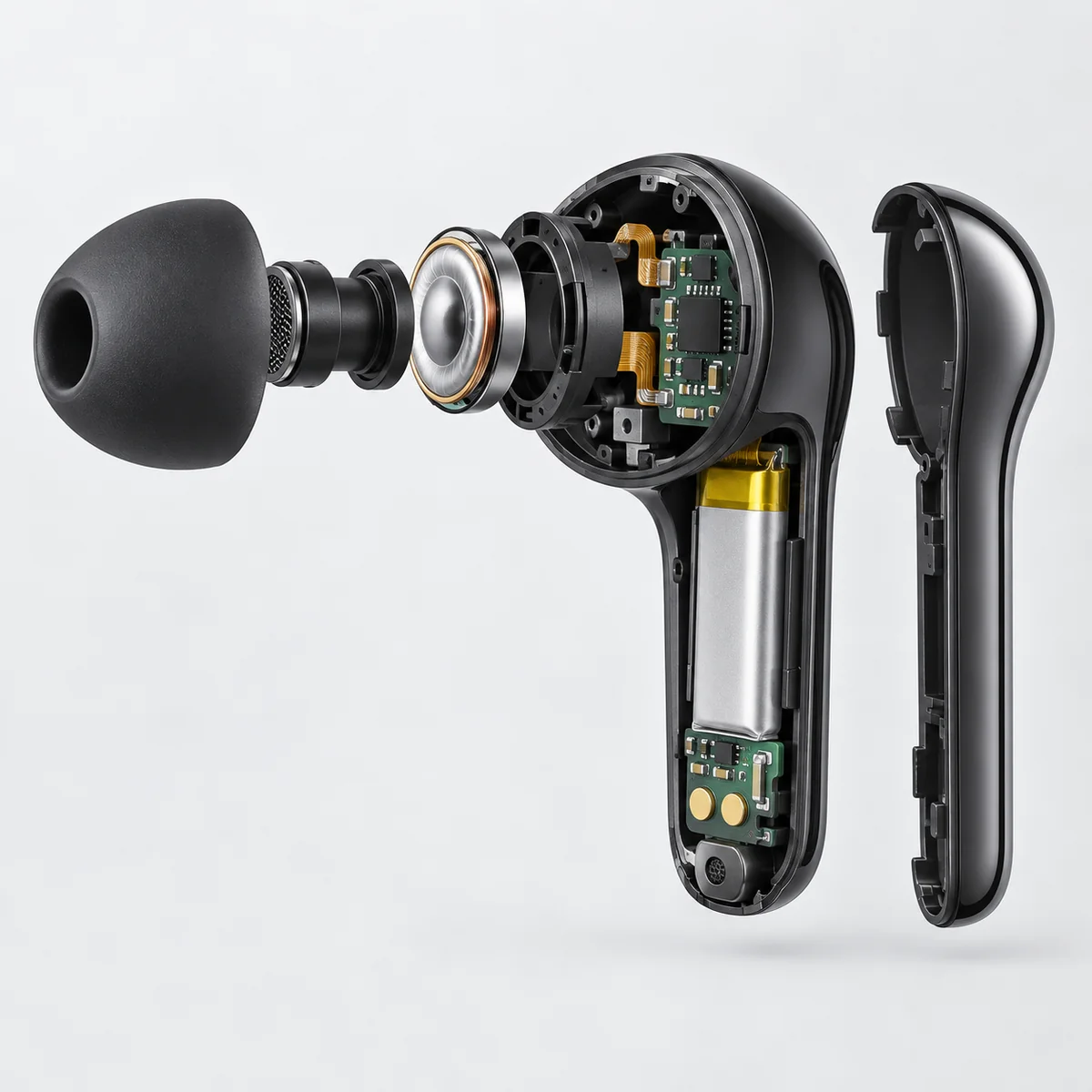
A driver is the component that converts an electrical signal into air movement. When the diameter increases, the driver has a larger effective radiating area, all else being equal. That may increase its potential to move air at low frequencies, so the idea that a larger driver can produce more bass is not completely unfounded. The important qualifiers are “may” and “all else being equal.”
A product page that lists only the driver diameter usually tells you nothing about diaphragm excursion, magnetic-circuit design, chamber volume, or tuning targets. Driver size can answer the question, “How much structural space did the designer allocate to this driver?” It cannot answer the question, “Will the earphone sound more natural across the entire frequency range?” More bass quantity does not automatically mean cleaner bass, and a thicker presentation does not automatically mean more detail. If the diaphragm, magnetic circuit, and chamber are not well matched, a larger driver may simply overemphasize one part of the spectrum.
In-ear products add another variable: the seal between the ear tip and the ear canal. If the seal is unstable, low-frequency energy leaks out and the perceived bass level can drop sharply. You may think you are comparing an 8 mm driver with a 13 mm driver, while you are actually comparing how well the earphones fit. The same driver can also behave differently in different chambers and with different ear tips.
Why a larger driver still does not guarantee better sound
There is very little space inside a TWS earphone, so driver diameter is not an unlimited control knob. The driver, magnetic circuit, acoustic chamber, and battery all compete for the same volume. The earphone must also balance ear pressure, in-ear comfort, and overall shape. In practice, engineers balance low-frequency output, low distortion, high-frequency extension, power consumption, industrial design, and comfort rather than maximizing only one factor.
The diaphragm and magnetic circuit determine how the driver responds to an electrical signal. The chamber and sound outlet shape how that sound reaches the ear canal. DSP tuning changes the final balance between frequency bands. Driver architecture also changes the division of labor. A hybrid design can assign different frequency ranges to different drivers, but that is only one way to meet a system target. It does not mean every TWS earphone needs a hybrid design, nor does it mean that more drivers are automatically better.
When we work on a complete earphone project, we address the customer’s sound requirements through driver selection and, where needed, tuning. The sources reviewed do not provide a universal sound-quality rating for any given diameter or a controlled comparison across diameters, so “larger is better” should not be presented as an industry rule.
It is also important to separate listening preference from objective performance. Some listeners prefer fuller bass; others care more about forward vocals or relaxed treble. Diameter can suggest a possible design direction, but the final judgment still depends on the target frequency response, distortion, and the sound produced once the earphone is properly fitted.
How to read a TWS earphone specification sheet
When you see claims such as “13 mm large dynamic driver” or “Hi-Fi driver,” use the following order of checks instead of letting the number guide you.
First, check whether the test is comparable. Frequency-response and distortion data should be interpreted together with the measurement setup, including the artificial ear or coupler, test level, ANC state, and test method. Curves measured with different equipment, different seals, or different levels cannot be used to rank two driver diameters directly. A standardized test framework helps reproduce conditions, but it does not mean every listener will hear exactly the same thing.
Second, review frequency response and distortion. Frequency response helps you see how energy is distributed across bands. Distortion indicates whether unwanted additional components appear at a given output level. These measurements are closer to the audible result than the driver diameter, but they still cannot be separated from their test conditions. If a page gives only a very wide “frequency range” without a curve, test conditions, or distortion data, the number has limited decision value.
Third, return to the driver and structural description. Confirm the driver type and look for information about the diaphragm and magnetic circuit. Check whether the chamber is designed for in-ear use and whether the tuning target is explained. Without that information, 8 mm, 10 mm, 12 mm, or 13 mm is only a starting point for further questions.
Fourth, include the seal and fit. When listening, use a suitable ear-tip size and maintain a stable fit in both ears. Listen separately for bass, vocals, and treble. If the bass changes sharply when you move the earphone slightly, check the fit and seal first. Do not immediately attribute the difference to driver diameter.
Fifth, choose according to the use case. If the goal is more bass, a larger driver may be worth considering for its potential. If the goal is balance, low distortion, or comfortable long-term wear, evaluate the chamber, tuning, power consumption, and industrial design together. No millimeter figure can make this trade-off for you.
Put the millimeter figure back into the whole earphone
The driver in an in-ear TWS earphone is therefore not simply a case of “the bigger, the better.” The important question is what role it plays in the complete earphone. Diameter may affect low-frequency output potential, but it cannot explain frequency response, distortion, treble, comfort, or the final listening experience on its own. When reading specifications, first confirm the test conditions, then examine frequency response and distortion, and finally consider the driver diameter, chamber, and seal in relation to the result. That order is more reliable than chasing a larger number.
For a brand owner or product manager, it is also more useful to turn “we need a bigger driver” into a measurable sound target: more bass, a more balanced response, or lower distortion in a small, comfortable enclosure. That gives a supplier room to propose a matching driver, structure, and tuning solution instead of replacing one marketing number with another.
Sources
The sources used in this article are as follows: S1, Sony’s general explanation of headphone drivers and driver diameter; S2, Knowles’ HD Audio in TWS Earphones technical white paper; S3, Cleer Audio’s explanation of drivers, acoustic chambers, frequency response, and distortion; S4, the T/TAF headphone measurement framework and related test-condition materials; and S5, technical materials on frequency-band division in hybrid TWS designs. The article does not use a single source to rank driver sizes; each conclusion acknowledges the limitations of the supporting material.
Popular TWS Earbuds
Wholesale from 100 pcs per model, mix models in one order. Your logo from 1,000 pcs.