
When trying earbuds with glasses, check more than whether the earbuds stay in place. Look for an earbud lifting a glasses arm or being pushed out of position by it. Clip-on earbuds grip the outer rim of the ear, while ear-hook earbuds curve over the top where the ear joins the head. Glasses arms also pass through this area toward the back of the ear. The two styles sit near different parts of your glasses, so each calls for attention in different places.
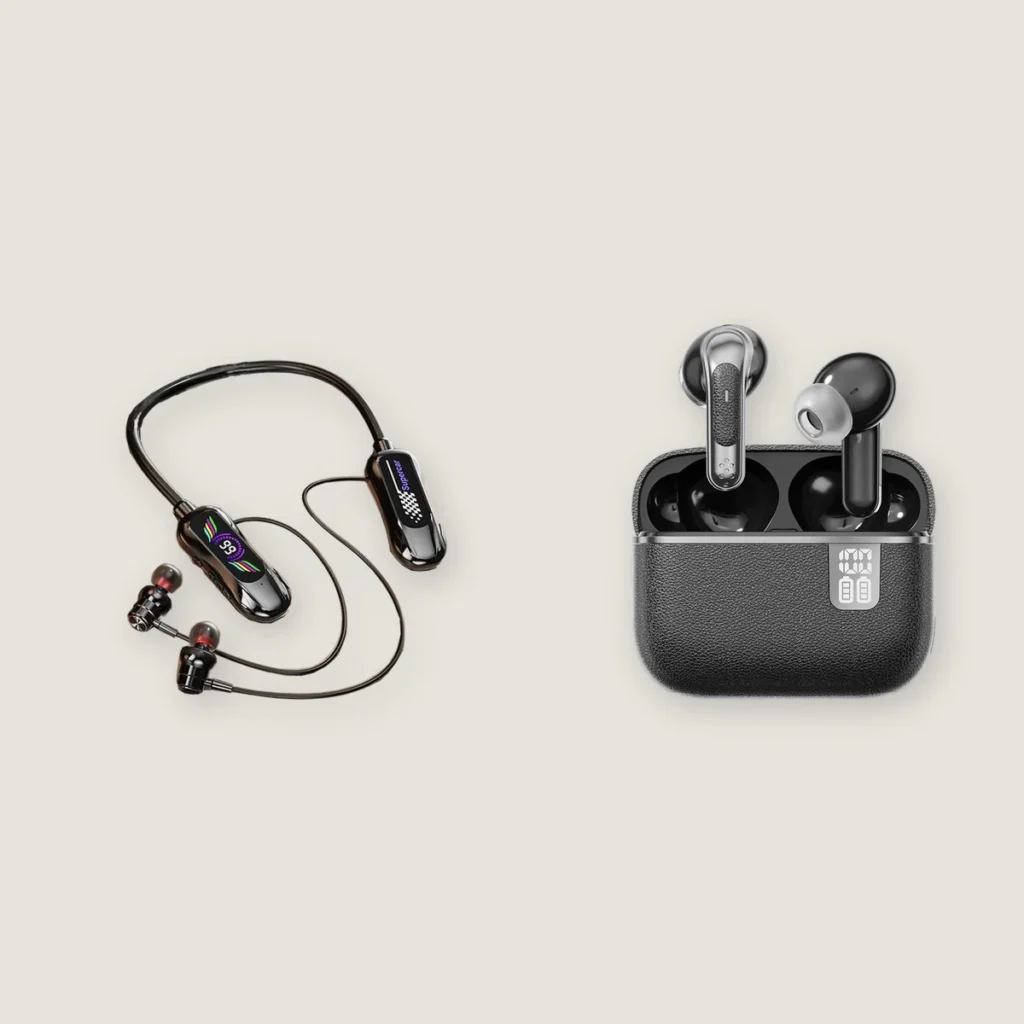
Yinshidon’s A87 clip-on earbuds and Q25 ear-hook earbuds illustrate these two shapes. To judge whether a particular model works with glasses, try it with the actual frames and check whether both can stay in a suitable position.
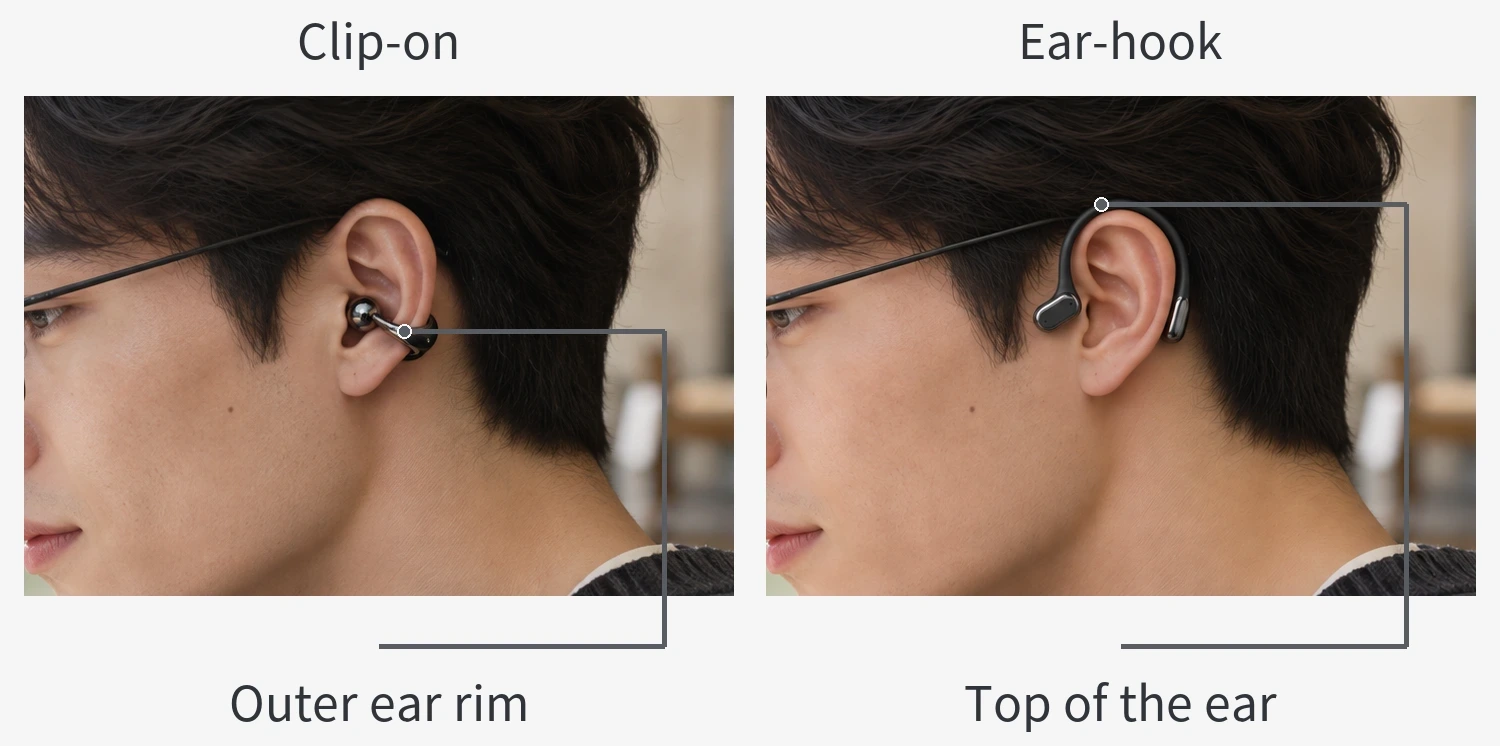
Clip-ons grip the outer ear rim; ear hooks pass over the top
Clip-on earbuds generally use a curved bridge to connect a front section and a rear section across the outer rim of the ear. One section sits in front of the ear and the other behind it, with the grip holding the earbud in place. This attachment point is separate from the upper area where glasses arms pass, but the housing behind the ear still needs room.
Ear-hook earbuds use a curved support that passes over the ear and around the back. With glasses on, the hook and the glasses arm occupy neighboring areas. They may sit clear of each other, or one may press against the other and shift it. An ear hook therefore does not automatically rule out wearing glasses. What matters is how that particular hook and frame sit alongside each other on your ear.
The ends of the glasses arms also affect where contact occurs
Checking whether an earbud touches a glasses arm means looking beyond the small area above the ear. Some arm tips curve downward; others sit closer behind the ear. Adding anti-slip hooks to the glasses also changes how much space they occupy behind the ear. Even when a clip-on earbud avoids the top of the ear, its rear housing may still touch these parts.
With ear-hook earbuds, check whether the glasses arm sits above the hook, alongside it, or is lifted by it. If putting on the earbuds noticeably raises one side of the frame, or lowering a glasses arm pushes an earbud out of place, the two are interfering in that position. Looking only at hook thickness or clip-on size cannot replace this observation.
Contact alone does not necessarily mean a poor fit. Check whether it causes pressure, whether the glasses remain stable, and whether the earbuds stay in a suitable listening position. Moving an earbud too far to clear a glasses arm may change what you hear, so listen again after adjusting it.
Compare the fit before and after adding glasses
When comparing samples of the two styles, first check the glasses and earbuds separately, then observe what changes when you wear them together. Using the same pair of glasses you normally wear makes it easier to identify where the difference comes from.
- Check each item on its own. Do the glasses already slip or feel tight? Do the earbuds feel loose or press on the ear when worn alone, and does the sound seem right? If clip-ons are uncomfortable even without glasses, first check the clip-on earbuds’ grip and wearing position, rather than attributing an existing problem entirely to the glasses.
- Check what changes when you combine them. Put both on following the instructions for that model, then compare the frame height and earbud position. For ear-hook models, focus on the upper area where the ear joins the head. For clip-ons, focus on the rear housing and the ends of the glasses arms. If lifting, rotation, or localized pressure appears only when they are worn together, you can identify the specific contact area.
- Gently turn and nod your head, then take your glasses off and put them back on. Watch whether the arms move the earbuds and whether the earbuds need repositioning. Once you have found a position without pressure, listen again to check that the sound on both sides is still suitable.
There is no single rule for every model about whether glasses or earbuds should go on first; follow the specific product instructions. Adjust the wearing position only in ways the product allows. Unless you have confirmed that the hook or connecting bridge supports adjustment by bending, do not bend it yourself to make room for the glasses arms.
When recording sample results, be more specific than “uncomfortable with glasses”: is there pressure above the ear, is one side of the frame being lifted, or is the clip-on’s rear housing touching the end of a glasses arm? Describing the exact location shows what needs adjusting and makes it easier to judge whether another sample improves the same problem.