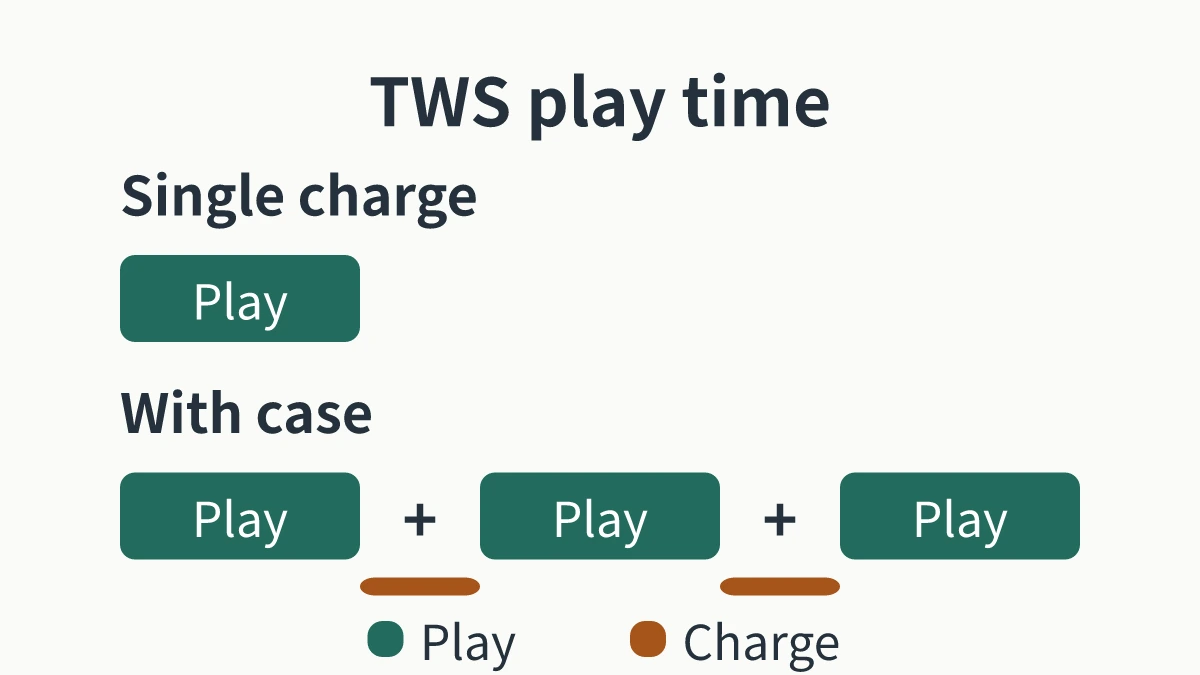
When comparing specifications for in-ear true wireless earbuds (TWS, or true wireless stereo), you will see two playtime figures: single-charge playback and total battery life with the charging case. To find out how long you can listen continuously, check the single-charge figure. To find out how much listening time a fully charged set provides in total, check the figure that includes the case. The difference comes down to when the earbuds use power and when they recharge.
What Each Battery Life Figure Counts
| Specification | Time counted |
|---|---|
| Single-charge playback | One listening session, from fully charged earbuds leaving the case to the specified stopping point |
| Total playback with the case | The first session plus later sessions made possible by recharging in the case, with both earbuds and case fully charged at the start |
| Standby time | Time spent in standby without playing audio; it cannot replace a playback-time figure |
Total playback with the case commonly means the first listening session + the second session + later sessions. Putting the earbuds back in the case involves waiting for them to recharge, but that waiting time does not count as playback. If a specification states total playback time for the earbuds and case together, the first session is usually already included. Do not add the single-charge figure again; check the notes for that model.
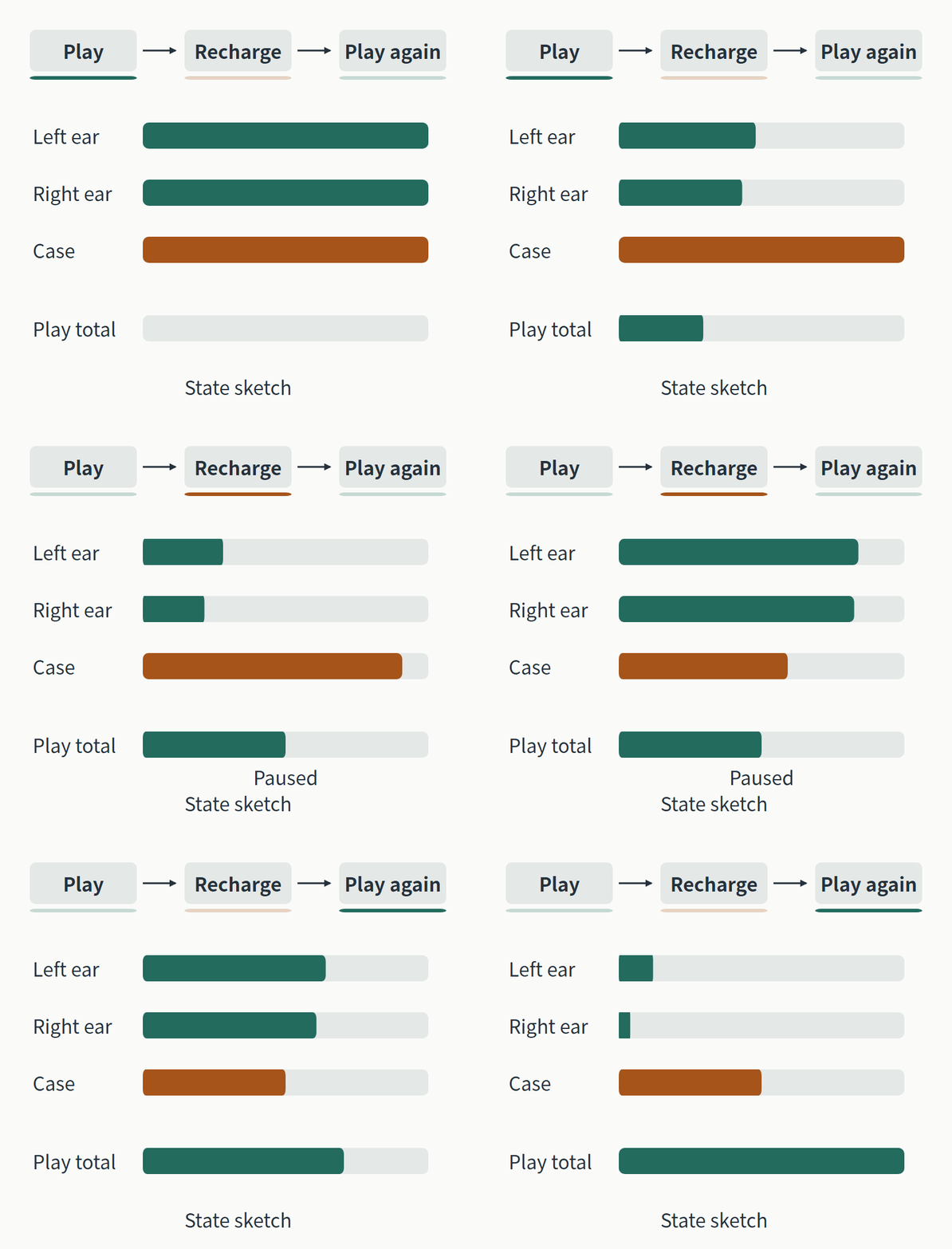
When both earbuds play at the same time, only one period of time passes. You cannot add the left earbud’s hours to the right earbud’s hours. A manufacturer’s test may also stop timing when the first earbud stops playing.
How the Charging Case Powers the Next Listening Session
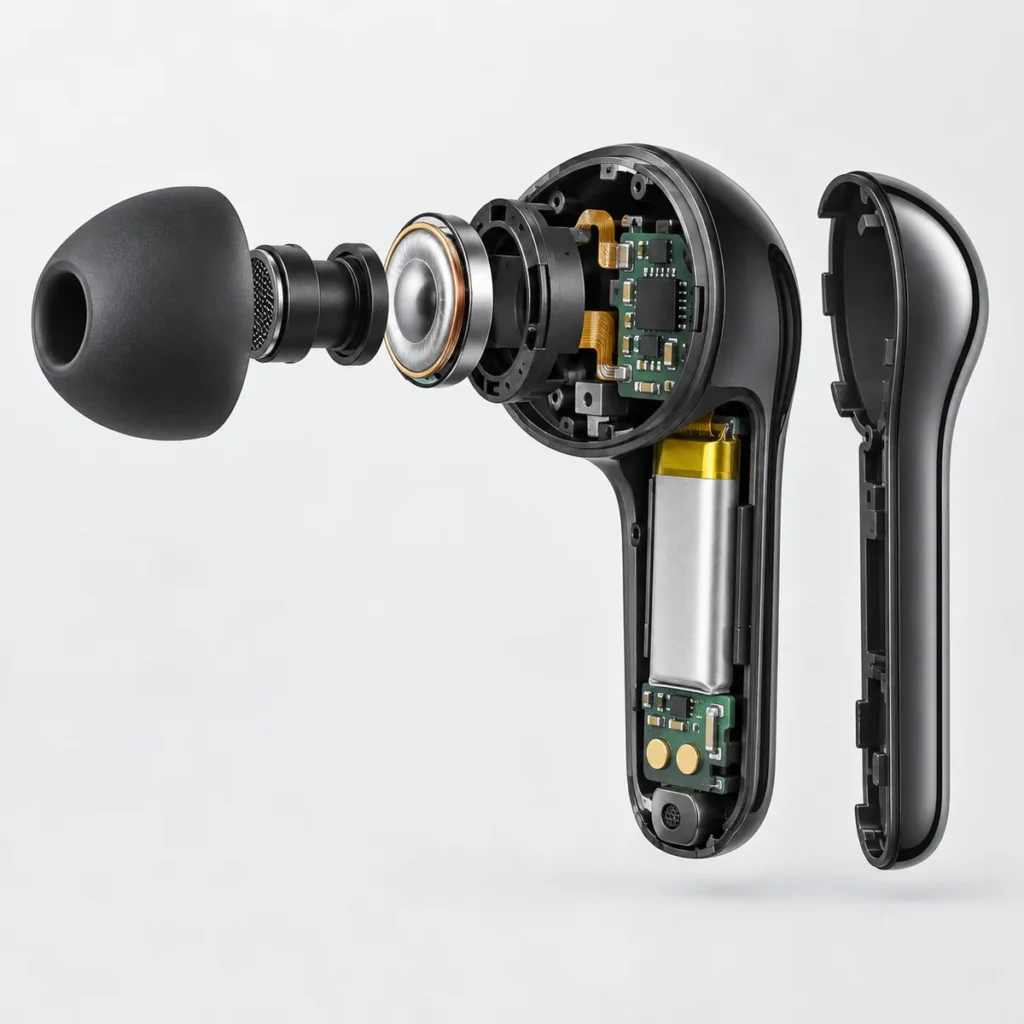
While you wear the earbuds, their own batteries power Bluetooth reception, audio processing, and the drivers. Even if the case still has charge, it does not continuously supply power to earbuds outside the case through Bluetooth.
Once the earbuds are back in the case, energy from the case battery passes through power conversion, charging contacts, and charging circuitry into each earbud’s battery. Taking the earbuds out again allows the next listening session to begin.
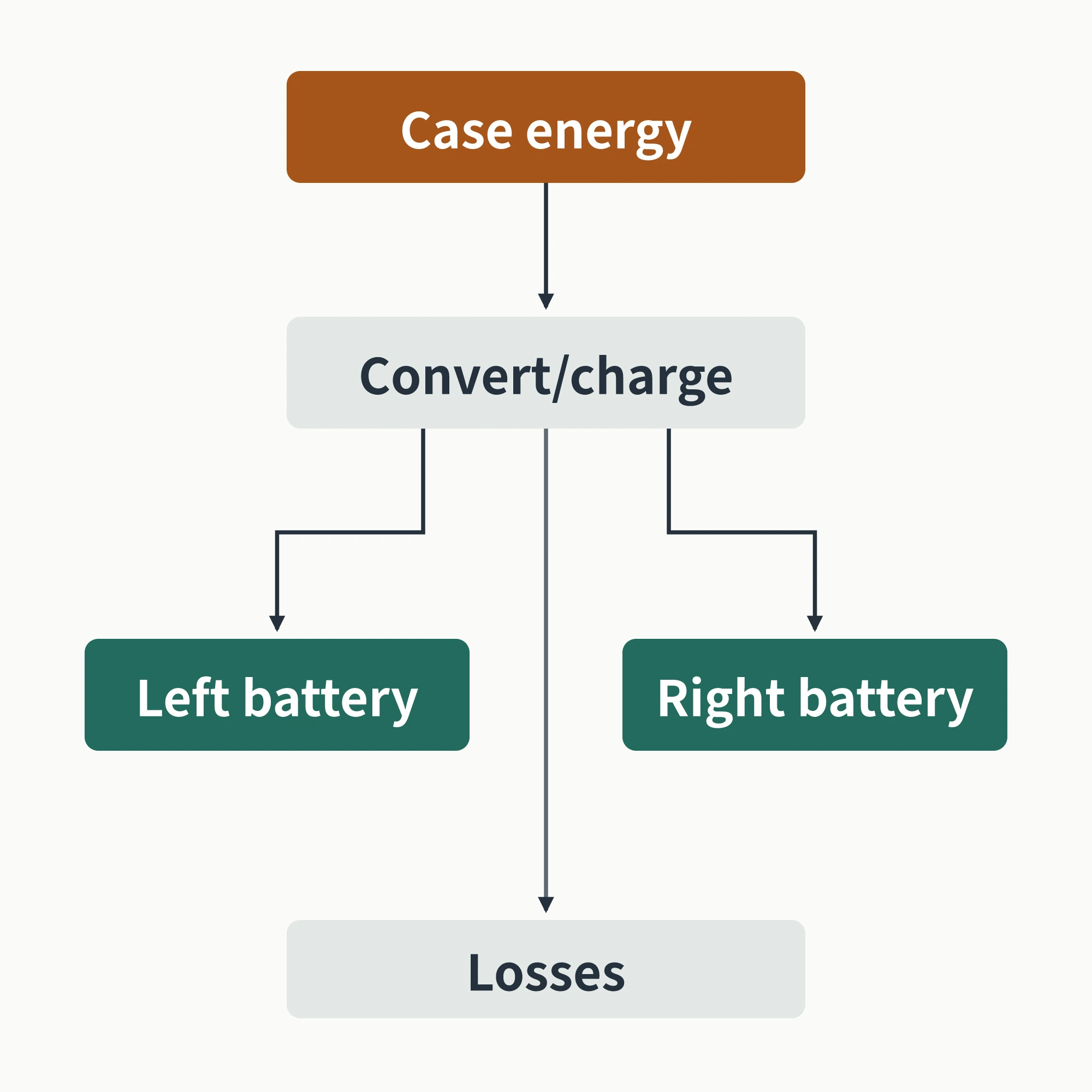
Not all the energy transferred ends up stored in the earbud batteries. Conversion and charging involve losses, with some energy becoming heat; the case’s own circuitry also consumes power. Therefore, case battery capacity divided by one earbud’s capacity does not directly give the number of full recharges for a pair of earbuds.
Single-Charge Playtime Depends on Energy and Power Use
You can understand each earbud’s playback time through this relationship:
Playback time ≈ usable energy from the earbud battery ÷ average power drawn from that battery
Usable energy is the energy the battery actually delivers from a full charge to the specified stopping point. Average power is the average rate at which energy is drawn from that battery under the same playback conditions. Both must be calculated at the same battery output. With energy in watt-hours (Wh) and power in watts (W), the result is in hours.
With the same usable energy, higher average power use depletes the battery sooner. Milliamp-hours (mAh) measure charge capacity; voltage is also needed to estimate nominal energy. Nominal energy is not the same as usable energy, so a capacity figure alone cannot guarantee a number of playback hours.
To extend battery life, first separate the two goals:
- Longer continuous listening on one charge: consider the earbuds’ own usable stored energy and playback power use.
- Charging the complete set from an external power source less often: also consider the case’s usable stored energy, losses when recharging both earbuds, and the case’s own power use.
Yinshidon can assess battery options as part of complete earbud configurations. If the battery compartment needs to be enlarged, new tooling requires a separate assessment of space and project requirements. Whether the earbud batteries or the charging case battery needs to change, and how much extra playtime this could provide, must be confirmed for the specific design.
Compare Battery Life Under the Same Conditions
Music playback, calls, and active noise cancellation require different operations. Calls involve microphone pickup; active noise cancellation also requires microphone pickup and audio processing, and these functions consume power. Their effect on playtime varies with the design.
| Conditions to align | What to check |
|---|---|
| Use mode | Music or calls; one earbud or both |
| Playback settings | Volume, active noise cancellation, and other feature modes, audio content, and codec settings |
| Test endpoint | Which earbud stopping playback ends the test; whether the earbuds and case are fully charged at the start |
If two models do not publish matching test conditions, you can understand each one’s claimed playtime, but the difference alone does not tell you which lasts longer under the same use conditions. Compare single-charge playback, total playback with the case, and test conditions together to understand which listening needs the figures describe.
Principle references: TI’s High-Efficiency Charging for TWS Using a 2-Pin Interface and ADI’s earbud charging article; the relationship between capacity and energy units follows Transport Canada’s technical guidance.
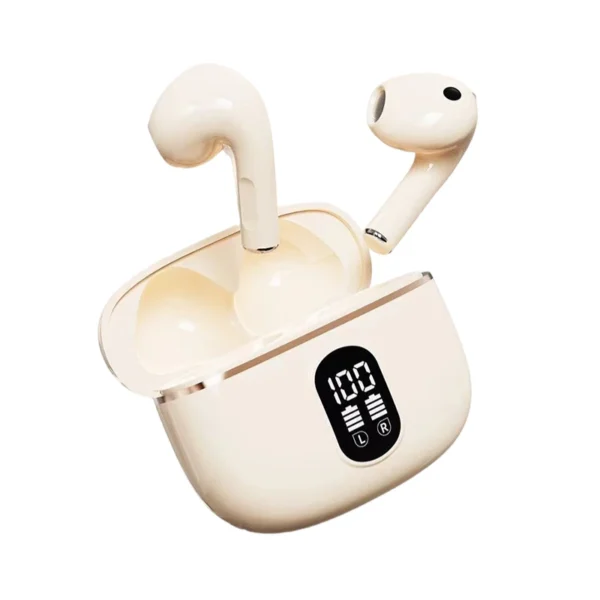
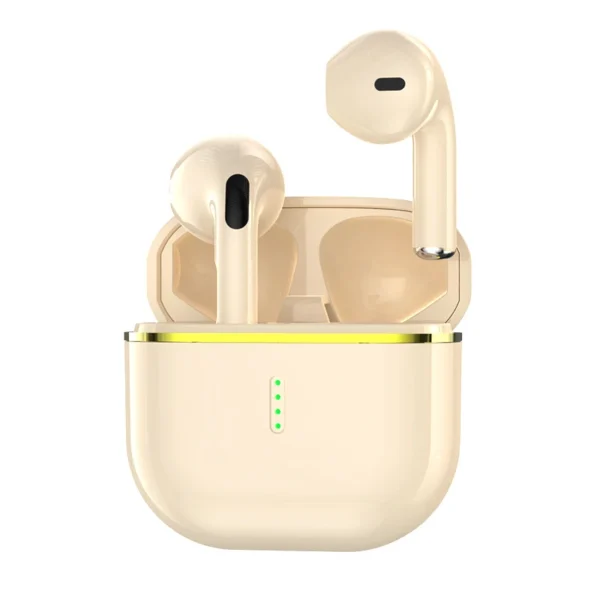
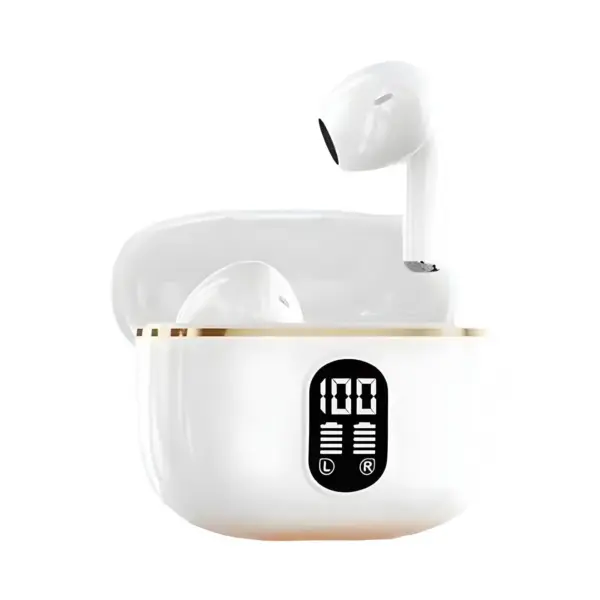
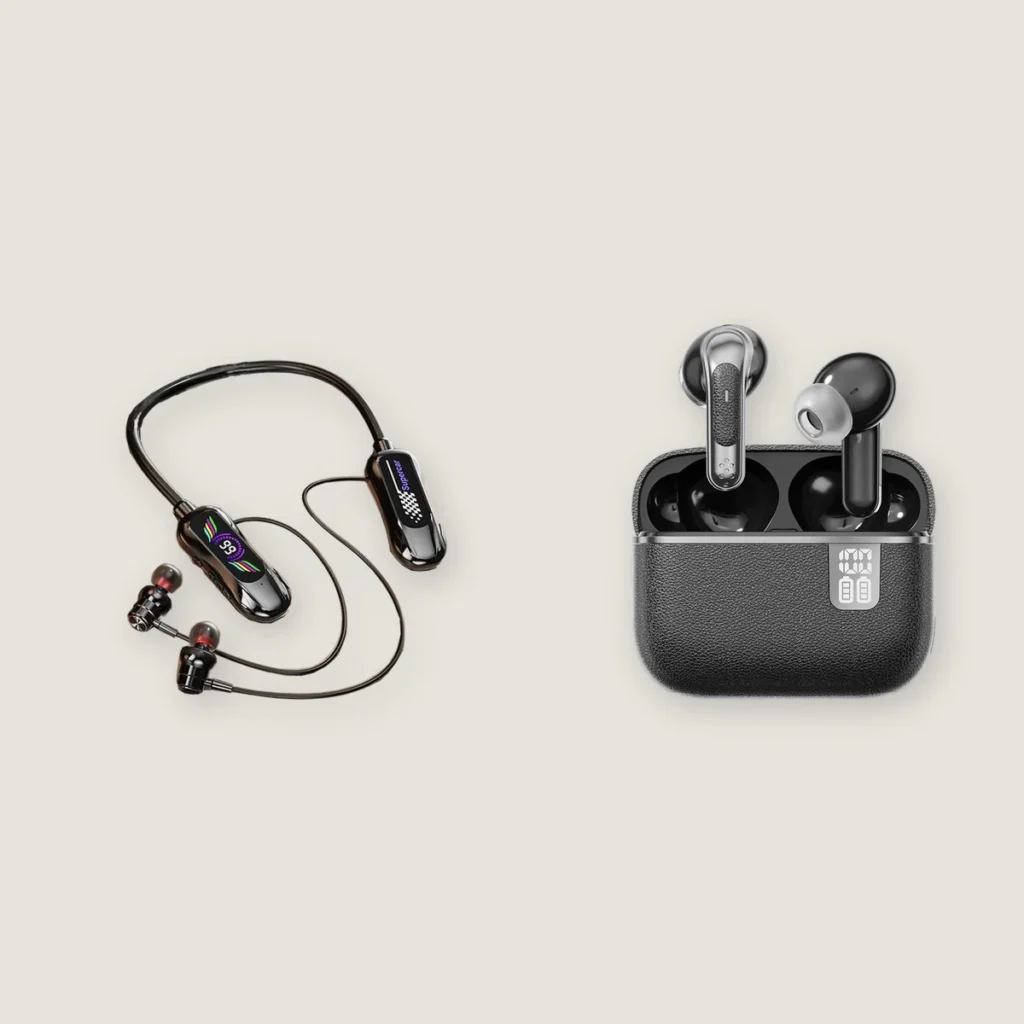
Popular TWS Earbuds
Wholesale from 100 pcs per model, mix models in one order. Your logo from 1,000 pcs.